Controlled Tree Removal Near Structures and Property
Tree removal service in Edinburg for hazardous, dead, or structurally compromised trees near homes and utilities
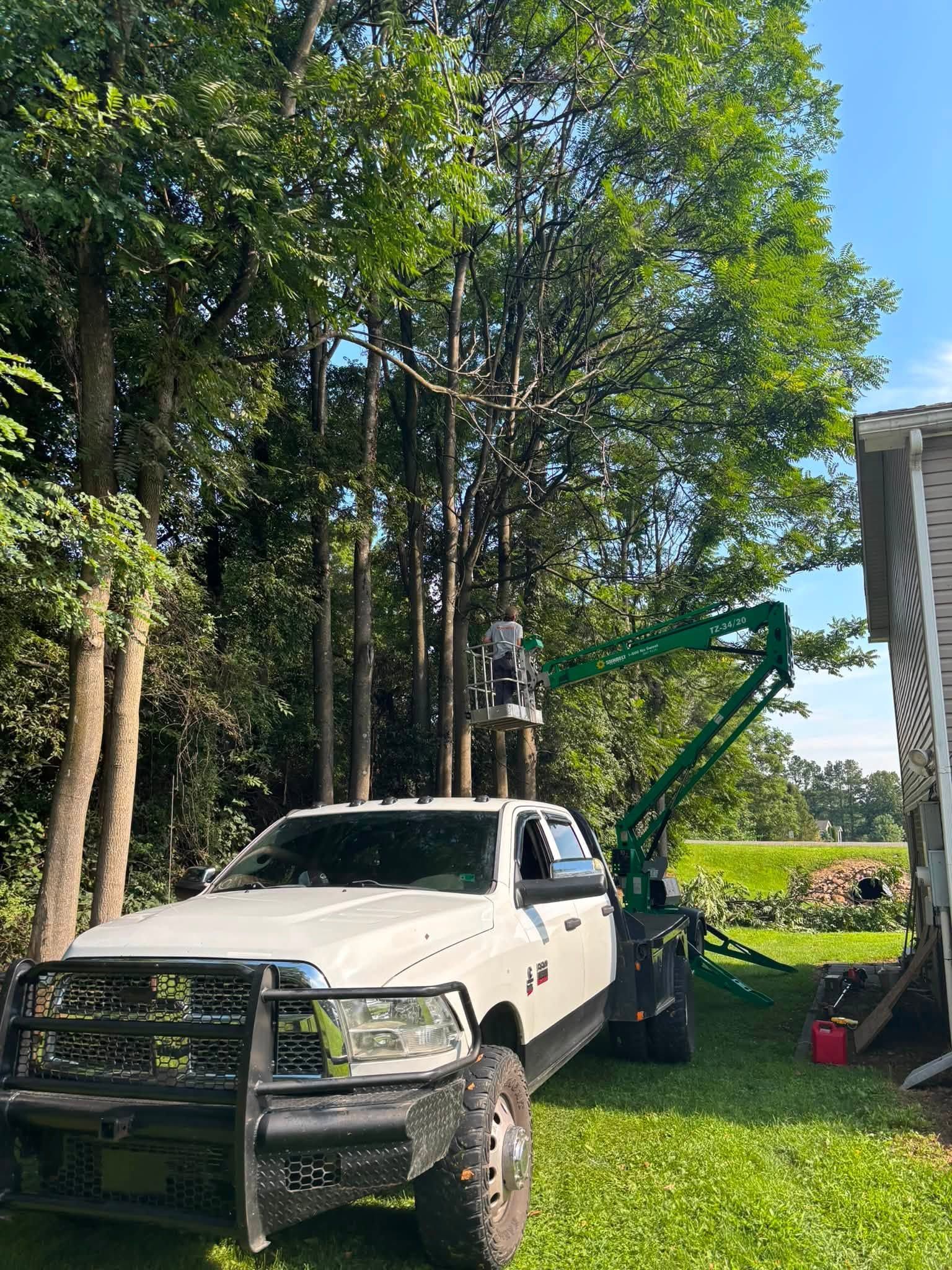
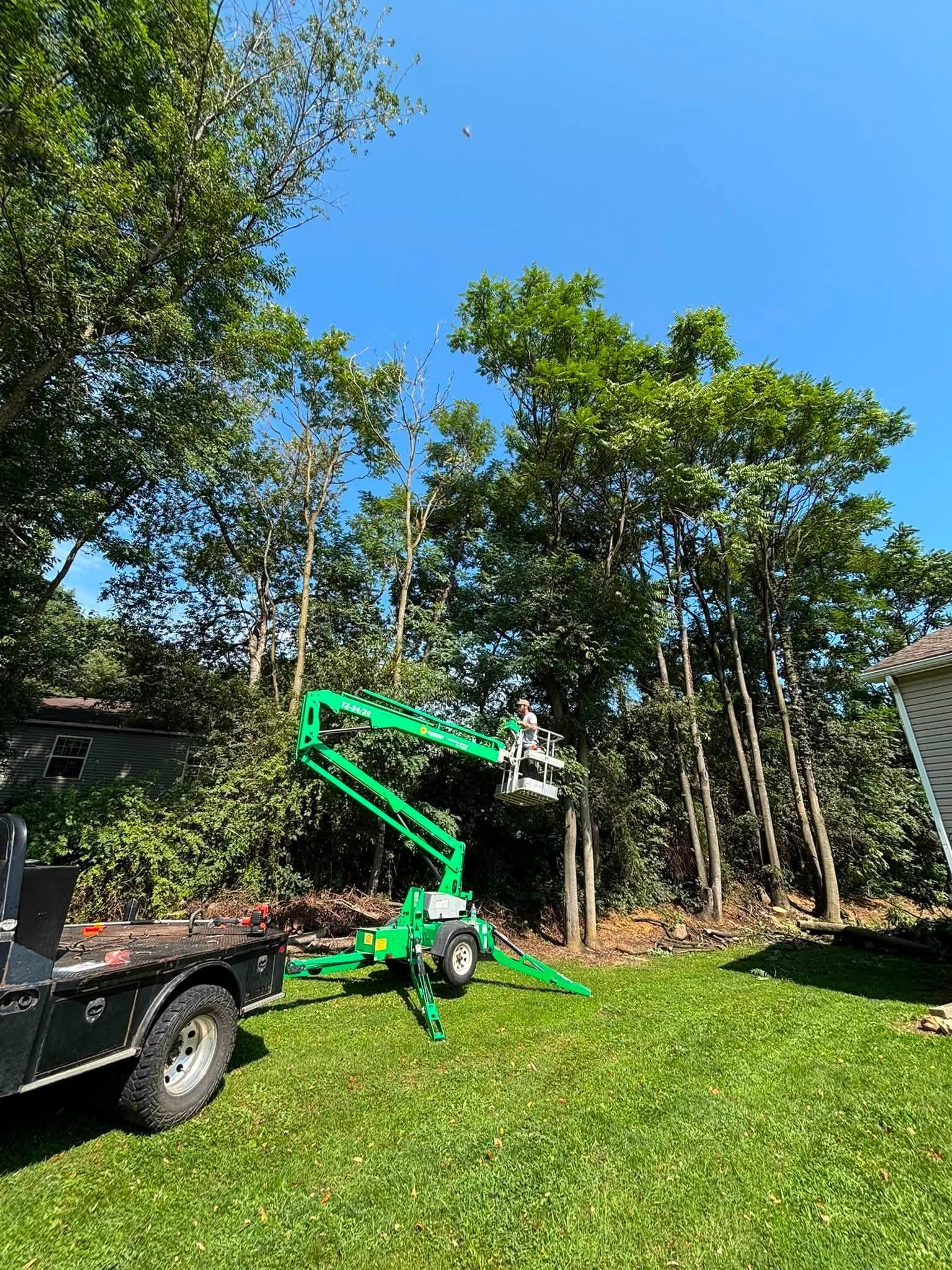
A dead tree leaning toward a roofline or a large limb suspended over a driveway cannot be handled the same way as a tree in open field—the removal sequence and method determine whether surrounding property stays undamaged. GT Excavation operates with in-house climbers trained in rope and rigging techniques that lower sections of a tree in a controlled sequence rather than felling the whole tree at once. This approach is standard practice for tree removal in Edinburg and throughout the Shenandoah Valley, where mature residential properties routinely have trees growing within feet of structures, power service lines, and paved surfaces.
Before any climbing or cutting begins, the crew assesses the tree's condition, identifies decay, checks for widow-makers in the canopy, and maps the obstacles on the ground below. That assessment drives the sequence: which sections come down first, where they land, and how rigging is set to control the drop zone. The owner of GT Excavation learned tree work directly from his father and worked under a professional contractor before establishing the business, giving him hands-on knowledge of how trees of different species, sizes, and conditions behave during removal.
Arrange an on-site evaluation to review the tree's condition, surrounding obstacles, and the access available before any work is scheduled.
How Rope and Climbing Techniques Protect Adjacent Property
Sectional removal using climbing and rope techniques gives the crew direct control over where each cut piece lands. A climber sets a rigging point in the upper canopy, attaches a lowering line to the section being cut, and guides it to the ground in a controlled path rather than allowing it to free-fall. This is the method that makes removal possible when a tree is touching or positioned directly above a structure—the alternative, felling the whole tree, is simply not viable in those situations without accepting property damage.
Once all sections are on the ground, the visible result is a cleared site: no canopy, no standing trunk, no suspended limbs over the structure. GT Excavation coordinates with insurance companies when a tree has already fallen on or damaged a home, handling the removal portion of that process in sequence with the broader claim and repair timeline. The crew also handles trees of all sizes, meaning the same approach applies whether the job is a single ornamental tree near a foundation or a large hardwood with a canopy spread over a roof and neighboring yard.
Tree removal work through GT Excavation is covered under a Class A contractor's license with full insurance, which matters specifically when the job involves a tree in contact with a structure or utility equipment. Debris generated during the removal is handled as part of the project rather than left on site, and stump removal can be added to complete the clearing work in a single mobilization.
Questions About the Tree Removal Process
These questions address how tree removal is actually performed, what the crew evaluates before starting, and what distinguishes professional removal from work that carries preventable risk.
What does the crew assess before beginning tree removal?
The climbers evaluate the tree's structural condition, looking for decay in the trunk and major limbs, identifying any dead wood suspended in the canopy, and mapping ground-level obstacles including structures, utility lines, and vehicles. That assessment determines the cutting sequence and rigging setup before any work begins.
How is a tree removed when it is positioned directly over a roof or structure?
The crew uses rope rigging to attach a lowering line to each section before it is cut, controlling where the piece goes rather than letting it fall. This sectional approach makes removal possible in tight spaces where felling the whole tree would cause direct structural damage.
What kind of tree work requires a professional contractor rather than a homeowner?
Any removal where the tree or its major limbs are within falling distance of a structure, utility line, fence, or vehicle requires professional rigging and climbing. Dead trees are particularly hazardous because decay affects structural integrity in ways that are not always visible from the ground, making the tree's behavior during cutting unpredictable.
How does the age and species of a tree affect the removal process in Edinburg?
Older hardwoods common in the Shenandoah Valley—oak, walnut, and hickory—develop dense, heavy limb structures that require careful rigging to control during descent. Species also affect how the wood behaves when cut: some split predictably, others check or fracture in ways that shift load on the rigging unexpectedly.
What happens to the wood and debris after the tree is removed?
Cut sections and brush are cleared from the site as part of the removal work. Large sections may be left for the property owner if firewood is wanted, or hauled away entirely depending on the scope agreed upon before the job starts.
GT Excavation also performs tree removal in Woodstock, Mount Jackson, Strasburg, New Market, and Middletown. To discuss a specific tree on your property, call GT Excavation at (540) 325-3806 to set up an on-site review of the tree's condition and the site layout.