
Ground Work Done Before Anything Else
Excavation in Edinburg for foundation work, utility trenching, and site preparation on residential, agricultural, and commercial properties
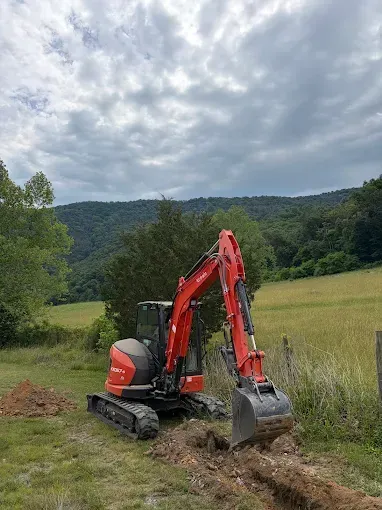
GT Excavation provides excavation services in Edinburg for property owners who need ground moved correctly before construction begins. Whether the project involves a foundation, a utility trench, or raw land that needs to be shaped and stabilized, the work requires planning before the first bucket of soil is lifted. Every project starts with a site evaluation to understand access, scope, and what lies beneath the surface.
Before any digging begins, GT Excavation calls 811 to locate buried utilities—a step that protects gas lines, water mains, and electrical conduits that can run unpredictably across rural and residential properties throughout the Shenandoah Valley. Many properties in and around Edinburg were developed incrementally over decades, meaning utility layouts don't always match what a landowner expects. That evaluation shapes equipment selection and determines how the dig is sequenced to avoid damage and keep the project on track.
Arrange an on-site evaluation to review your project scope and identify what the ground conditions require before work begins.
How Excavation Work Is Sequenced and Why It Matters
Excavation isn't a single action—it's a series of decisions about depth, slope, soil displacement, and how the disturbed area will be stabilized once the equipment leaves. Foundation excavation requires precise depth and a level bearing surface; utility trenching requires consistent grade so pipes drain or run correctly; site prep for agricultural use requires a different approach again, focused on moving material without creating compaction problems in adjacent areas. The owner of GT Excavation has worked in this trade since childhood alongside his father, and that background shows up in how projects are scoped and executed rather than just how equipment is operated.
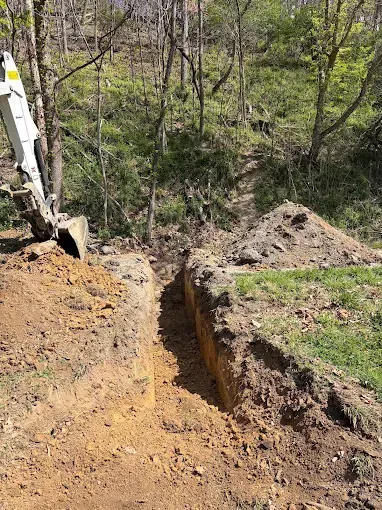
Once the work is complete, you'll see clean, defined walls on foundation cuts, consistent trench depth across the full run, and a surface grade that gives the next trade—whether concrete, plumbing, or framing—a workable base to build from. What you won't see is evidence of rushed backfill, uneven spoil piles, or disturbed areas that weren't part of the project scope.
GT Excavation holds a Class A contractor's license, operates as a licensed and insured LLC, and has completed utility and foundation projects on both residential and agricultural properties across the region. The scope of each project—what gets moved, where it goes, and how the site is left—is established during the initial evaluation before any equipment is mobilized.
Common Questions About the Excavation Process
The questions below address how excavation work is actually carried out, what preparation is required, and what to look for once the job is finished.
What happens during the site evaluation before excavation starts?
The evaluation assesses access points, project goals, and surface conditions that affect equipment selection and dig sequencing—without that step, assumptions get made that cost time once the work begins.
Why is calling 811 required before excavation work in Edinburg?
Buried utilities on rural and residential properties in the Shenandoah Valley don't always follow predictable paths, and striking a gas or water line creates safety hazards and project delays that a utility locate prevents.
How does the condition of the site affect what equipment is used?
Soft or saturated ground, steep grades, and tight access points all change which machine is appropriate—using oversize equipment on a compromised site causes rutting and compaction that affects the finished work.
What should the excavated area look like when a foundation dig is finished?
Wall faces should be clean and consistent with no loose material sloughing in, the floor of the cut should be level within the tolerance the foundation design requires, and spoil should be staged where it won't interfere with the next phase.
How does agricultural excavation differ from residential foundation work?
Agricultural projects typically prioritize soil displacement and drainage function over precision depth tolerances, and the scale of earthmoving is often larger—both factors change how the work is planned and how long it takes to complete.
GT Excavation also performs excavation work in Woodstock, Mount Jackson, Strasburg, New Market, and Middletown. If you have a project ready to plan or a site that needs an initial look, contact GT Excavation directly at (540) 325-3806 to schedule a property evaluation.