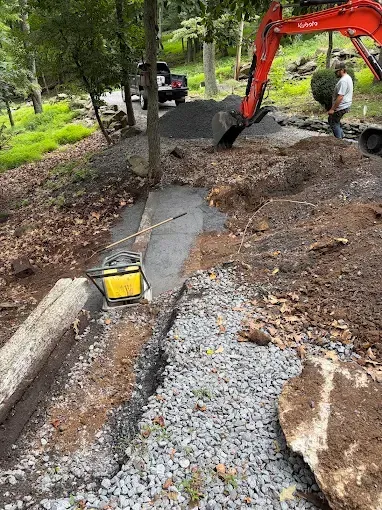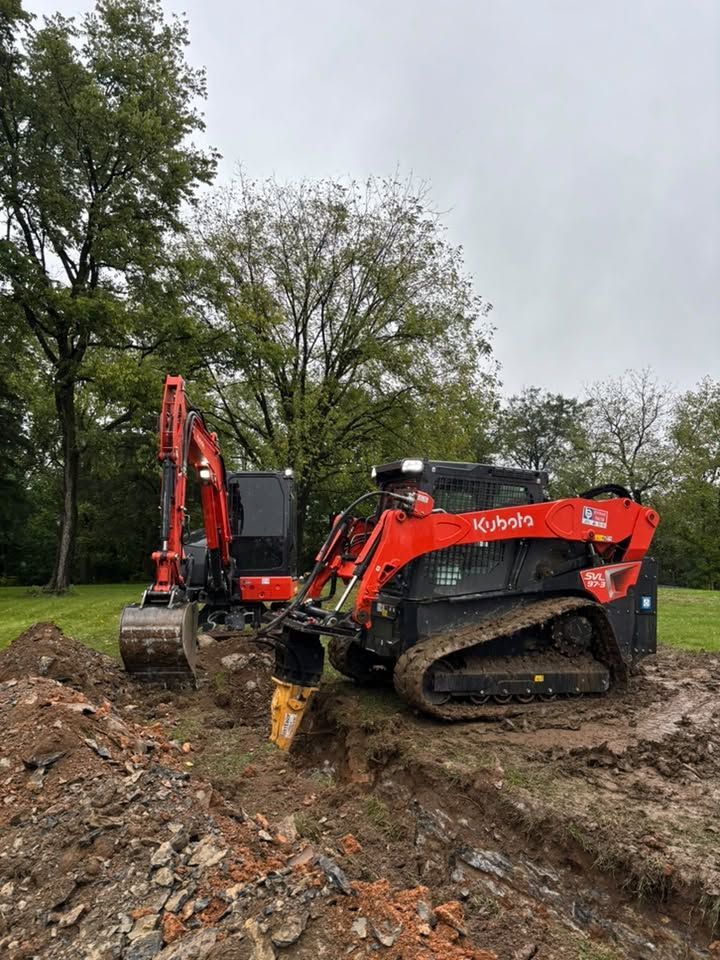

Excavation Done to Engineer Specifications and Grade
Foundation excavation in Edinburg for new construction and additions requiring precise depth and bearing surface preparation
Before a concrete crew can set footings, the ground has to be opened to the correct depth, width, and bearing condition specified in the building plans. GT Excavation handles foundation excavation for new construction and additions throughout Edinburg and the Shenandoah Valley, working directly from your engineer's specifications to dig to grade, manage spoil, and deliver a prepared pad that is ready for concrete work on schedule. The owner learned foundation excavation under his father's excavation business, spent a year working alongside a contractor mentor, and started GT Excavation in 2025 with that background applied to every job.
Every foundation dig at GT Excavation begins with an 811 utility locate call before any equipment enters the site. Once utilities are marked, the site evaluation and your building plans determine the excavator size, the dig sequence, and whether spoil is hauled away or stockpiled on-site for backfill use later. Edinburg and the surrounding area include properties on both flat valley floor lots and steeper hillside parcels, and the terrain directly affects which equipment is suited to the site and how spoil is managed without disrupting the building footprint.
Arrange a site evaluation with GT Excavation to review your building plans and confirm the excavation scope before work begins.
Why the Sequence of Foundation Excavation Matters
Foundation excavation is not simply digging a hole to approximate depth—the bearing surface left at the bottom must meet the engineer's specification for soil condition and level, because the footings transferring the building's load rest directly on it. GT Excavation excavates to grade using equipment matched to the terrain, then dresses the bottom of the excavation to the dimensions the plans require. Spoil is either hauled from the site or staged in a location that keeps the footprint clear and accessible for concrete and framing crews arriving on their own schedule.
When the excavation is complete, your builder and concrete crew will find a clearly defined, level pad at the specified depth with clean sidewalls and no loose material on the bearing surface. The footprint will be clear of equipment and stockpiled material so concrete work can begin without delays caused by site access conflicts—an outcome that matters particularly on smaller lots in areas like Woodstock where the relationship between the excavation area and site boundaries is tighter.
Coordination between excavation, utility marking, and your builder's schedule is part of what determines whether a foundation dig runs cleanly. GT Excavation requires that you provide site access and coordinate the concrete crew's arrival so that the pad is not sitting open longer than necessary. The 811 locate call is placed before every dig without exception—this is not an optional step, and it is handled directly rather than deferred to another party.
Answers About How Foundation Excavation Is Done
Foundation excavation on Shenandoah Valley properties involves site-specific decisions about depth, equipment selection, spoil management, and utility coordination that vary based on lot conditions and building plans. These questions address the work itself.
What happens during the site evaluation before excavation begins?
The site evaluation reviews your building plans to confirm depth, width, and bearing dimensions, assesses the terrain and access for equipment positioning, and identifies where spoil will be placed or whether haul-away is required.
Why is the 811 utility locate call required before foundation excavation?
Unmarked utilities—gas lines, water mains, buried electrical, or telecommunications infrastructure—can be present at foundation dig depths on developed lots, and striking them creates safety hazards and project delays that calling 811 ahead of time prevents.
How does the excavator create a level bearing surface at the bottom of the dig?
The operator works in passes to reach specified depth, then uses the bucket to dress the floor of the excavation flat to grade, removing loose material that would compress under footing load and create differential settlement in the finished structure.
What determines whether spoil is hauled away or stockpiled on-site?
If the building plans require backfill after foundation walls are poured, suitable spoil can be staged on-site; if the material is not suitable for compaction around the foundation, or if the lot is too small to hold the volume, it is hauled and disposed of off-site.
How does lot slope affect the foundation excavation approach on Shenandoah Valley properties?
Steeply sloped parcels common on hillside lots in this region require cut-and-fill decisions to establish a level pad, and the excavator may need to work in a sequence that manages the uphill face of the dig to prevent sloughing into the cleared footprint before concrete work begins.
GT Excavation also performs foundation excavation in Woodstock, Mount Jackson, Strasburg, New Market, and Middletown. To start the process on your new construction or addition project in Edinburg or the surrounding valley, call (540) 325-3806 to schedule a site evaluation.