
Basement Digs Managed from Lot to Level Pad
Basement excavation in Edinburg for new homes and additions requiring full-depth site preparation and grade management
The difference between a basement excavation that keeps a project on schedule and one that creates delays usually comes down to how the dig is sequenced and who coordinates the moving parts. GT Excavation handles full basement excavation for homes and additions throughout the Shenandoah Valley, managing utility location, soil removal, and final grading so that concrete crews arrive to a level, clear pad at the depth your plans require. GT Excavation is a Class A licensed LLC, and the owner has been working basement and foundation digs since childhood under his father's excavation business—that background is not incidental to how the work is approached.
Before any excavation begins, GT Excavation confirms that 811 has marked all utilities on the site. From there, the dig follows the depth and dimensions your building plans specify. Soil is either hauled away or retained on-site for backfill depending on material suitability and lot space. Homes in the Strasburg and Mount Jackson area are a mix of older structures on established lots and new construction on parcels that have not been previously disturbed—both situations require different site assessment approaches before the excavator sets up, particularly around buried utility routing and existing drainage patterns.
Request a site assessment to review your lot conditions, building plans, and spoil management options before scheduling the dig.
What Basement Excavation Actually Accomplishes on Site
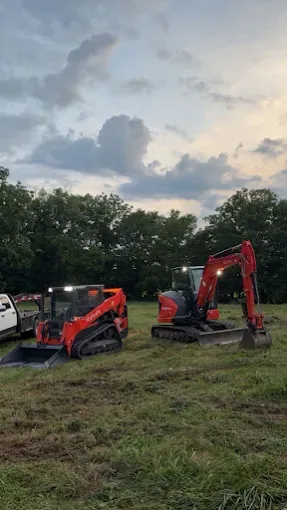
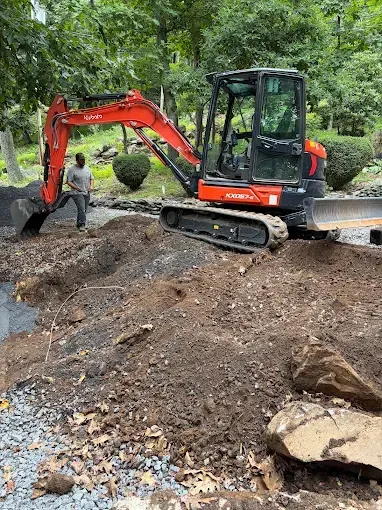
A basement excavation involves more than removing a volume of soil—it requires creating a level bearing surface at a specified depth with clean, defined sidewalls, managing water movement away from the open excavation while work is underway, and staging or removing spoil without blocking the footprint needed by concrete crews. GT Excavation uses an excavator matched to the terrain and lot access conditions, working in a planned sequence so that the bottom of the dig reaches grade evenly rather than requiring extensive hand-dressing to correct an uneven floor.
When the excavation is finished, your footprint will be clear of equipment and loose material, the bearing surface will be at the elevation your plans specify, and water flow will be directed away from the open foundation area. Your concrete crew can move directly into forming and pouring without having to address grade corrections or access obstructions—a handoff condition that keeps the overall construction timeline intact.
Permitting requirements for basement excavation vary by county in the Shenandoah Valley, and GT Excavation manages coordination with county offices when permits are required for the dig itself. The footprint, depth, and spoil volume all affect how the project is permitted and sequenced, which is why the site assessment and building plan review happen before equipment is scheduled. What you provide is site access and coordination with your builder—GT Excavation handles the excavation scope from setup through final grade.
Common Questions About Basement Excavation Work
Basement excavation on Shenandoah Valley lots involves site-specific decisions about dig sequence, spoil handling, utility management, and final grade that depend on your plans and lot conditions. These questions address the excavation process directly.
How is the bearing surface at the bottom of a basement excavation prepared for concrete footings?
After reaching the specified depth, the excavator dresses the floor of the dig to remove loose or disturbed material, leaving a firm, level surface at the elevation your engineer requires so footings bear on undisturbed soil rather than compressible fill.
What determines whether excavated soil is kept on-site or hauled away?
Soil suitability for compaction around the foundation walls is the primary factor—clay-heavy material that drains poorly is typically removed rather than used as backfill, while well-graded soils can be staged on-site and returned after concrete work is complete.
Why does the sequence of a basement dig matter for the overall construction schedule?
Concrete crews work to a fixed schedule; if the excavation is not complete and clear when they arrive, the delay compounds through the entire framing and finishing timeline, which is why the dig is planned to finish before the concrete window rather than concurrently with it.
How does excavating on a previously undisturbed lot differ from digging near an existing structure?
Undisturbed lots in areas like Strasburg and Mount Jackson may have unmarked utility runs and unpredictable subsurface conditions, while digs near existing structures require closer attention to how the open excavation affects adjacent footings and whether the sidewall slope needs to be managed to prevent undermining.
What does water management during an open basement excavation involve?
The excavator creates a grade at the dig floor that directs any groundwater seepage or surface water toward a sump point rather than allowing it to pool under the future bearing surface, which would soften the soil before footings are poured.
GT Excavation also handles basement excavation in Woodstock, Mount Jackson, Strasburg, New Market, and Middletown. To discuss your project specifics and schedule a site assessment in Edinburg or the surrounding area, call GT Excavation at (540) 325-3806.