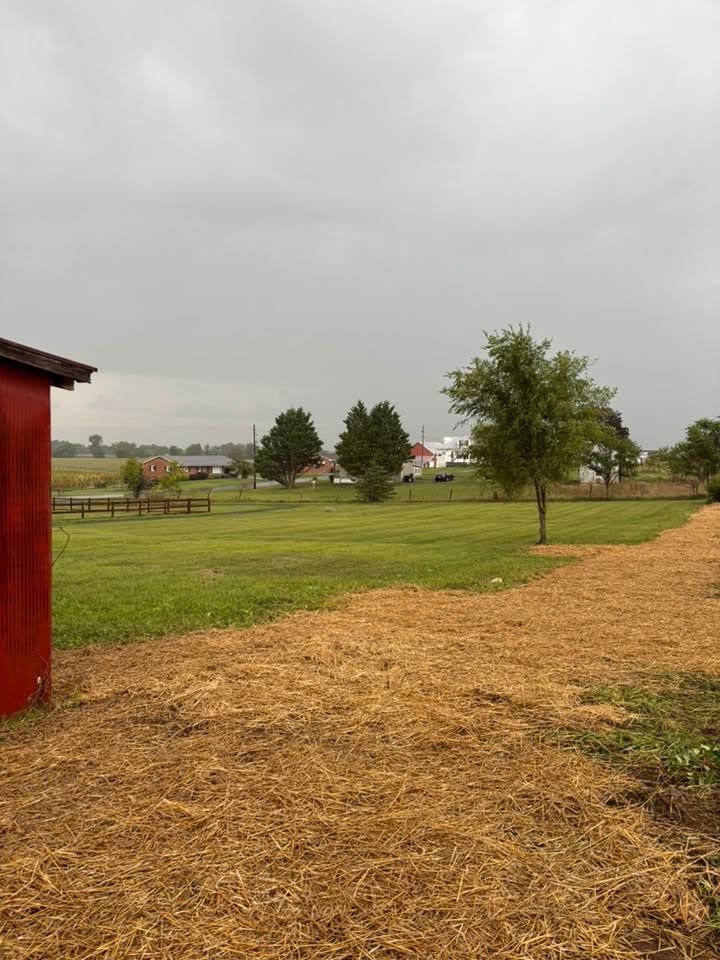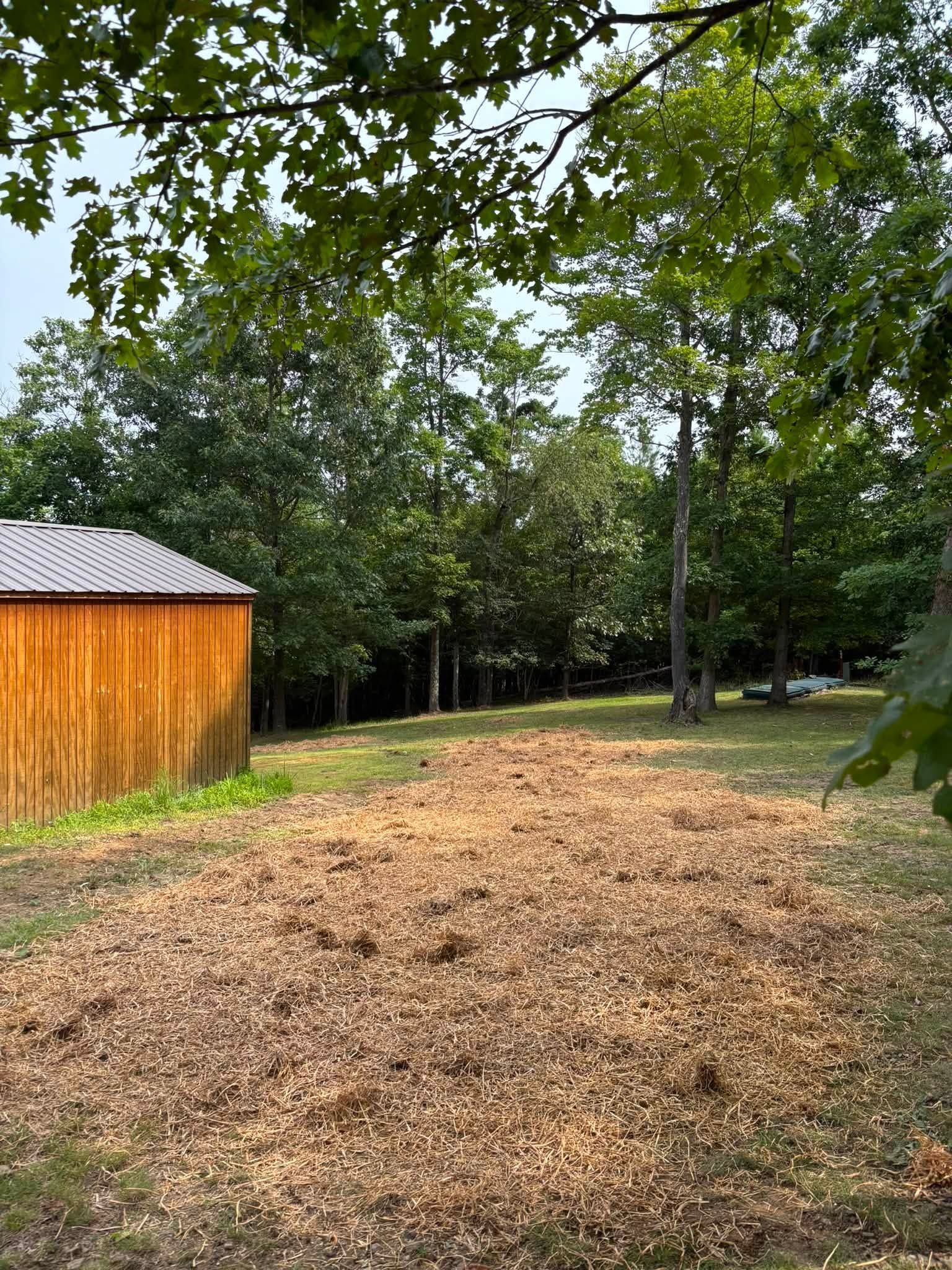

Overgrown Fields Cut Back to Workable Ground
Bush Hogging in Edinburg for pastures, hayfields, and back lots lost to brush and saplings
GT Excavation performs bush hogging in Edinburg, cutting thick brush, briars, and small trees down to ground level on pasture, hayfield, and open acreage. You need this once a field has gone years without mowing and the growth is too woody for a finish mower. The owner raises cattle and runs a hay business on weekends, so your job is scoped by someone who knows what a field needs before it can be grazed again.
The work uses a tractor-mounted bush hog that cuts and mulches vegetation in place, so nothing is hauled off site. On heavier growth, the cut is made in more than one pass, or the blade height is set higher on the first pass and dropped on the second so the machine is not choked by stems. Rocks, old wire, and stumps hidden in tall growth are the main hazards, and the first pass is run with that in mind.
Walk the field with GT Excavation and point out the areas you want opened up and the cut height you expect.
What Bush Hogging Actually Accomplishes
You get brush and saplings cut to a uniform height across the whole area, with the stems chopped into mulch that breaks down where it lies. Nothing is pulled out by the roots, so the existing grass base stays in place.
Once the cutting is finished, you can see the lay of the land again: fence lines, gullies, and old farm lanes. A field that was impassable can be walked, mowed with regular equipment, or fenced and stocked, and the edge of the woods is clean instead of ragged.
Bush hogging cuts what is above ground; it does not grub stumps or pull roots, so if you plan to build or grade, stump removal is a separate step. Cutting height is a real decision point, since a higher cut protects grass crowns for pasture recovery while a lower cut gives a cleaner finish on lots headed toward development. GT Excavation holds a Class A contractor's license and is licensed and insured as an LLC.
What Landowners Ask About Brush Cutting
Most questions come from owners of idle acreage now mixed with saplings.
How thick a growth can a bush hog cut?
A tractor-mounted rotary cutter handles tall grass, briars, and small woody saplings, while larger trees are felled separately before the field is cut.
What happens to the cut material?
It is chopped and left on the ground as mulch, so the field does not need raking before regular mowing.
How should you prepare a field before the cutter arrives?
Flag any buried wire, old fence posts, well heads, or rock piles you know about, since these are hard to see in tall growth and can damage the cutter deck.
Why do some fields need more than one pass?
Dense or woody growth can bog down the blades, so the first pass knocks it down at a higher setting and a second pass brings it to the final height.
What should you watch for after a field in Edinburg is cleared?
On older farm parcels around Edinburg, saplings sprout back from cut stems, so regular mowing afterward keeps the field from closing in again.
GT Excavation also performs bush hogging in Woodstock, Mount Jackson, Strasburg, New Market and Middletown. Set a time for GT Excavation to look over your acreage and talk through cut height and where the cleared edge should stop.