
Land Cleared and Conditioned in a Single Pass
Forestry mulching in Edinburg for overgrown parcels where trees, brush, and stumps need to be cleared without haul-away
Dense brush lines, overgrown fence rows, and mixed timber stands are common conditions on Shenandoah Valley parcels, whether the property has been left unmanaged for years or cleared previously and reclaimed by secondary growth. Traditional clearing—cutting, stacking, and hauling—requires multiple equipment types, multiple site visits, and a place to move the material. Forestry mulching eliminates that sequence by grinding trees, stumps, and brush into fine mulch in a single pass and spreading it directly across the ground where it stood. GT Excavation brings a tracked carrier with a forestry mulcher head to your site, and the operator runs the machine through the target area continuously until the clearing is complete.
The owner of GT Excavation operates excavation and land management equipment daily on his own farm and cattle operation, which means the decisions made during a mulching project reflect practical land management experience. On agricultural parcels, the distinction between what gets mulched and what gets preserved—fence lines, mature trees, drainage swales—is made by an operator who manages those same decisions on his own acreage. GT Excavation is Class A licensed and insured, and the mulching operation is matched to the specific vegetation density and ground conditions of your lot in Edinburg or the surrounding valley.
Schedule a site visit to assess your parcel's vegetation density and determine the clearing approach before the equipment is scheduled.
What Forestry Mulching Produces Compared to Traditional Clearing
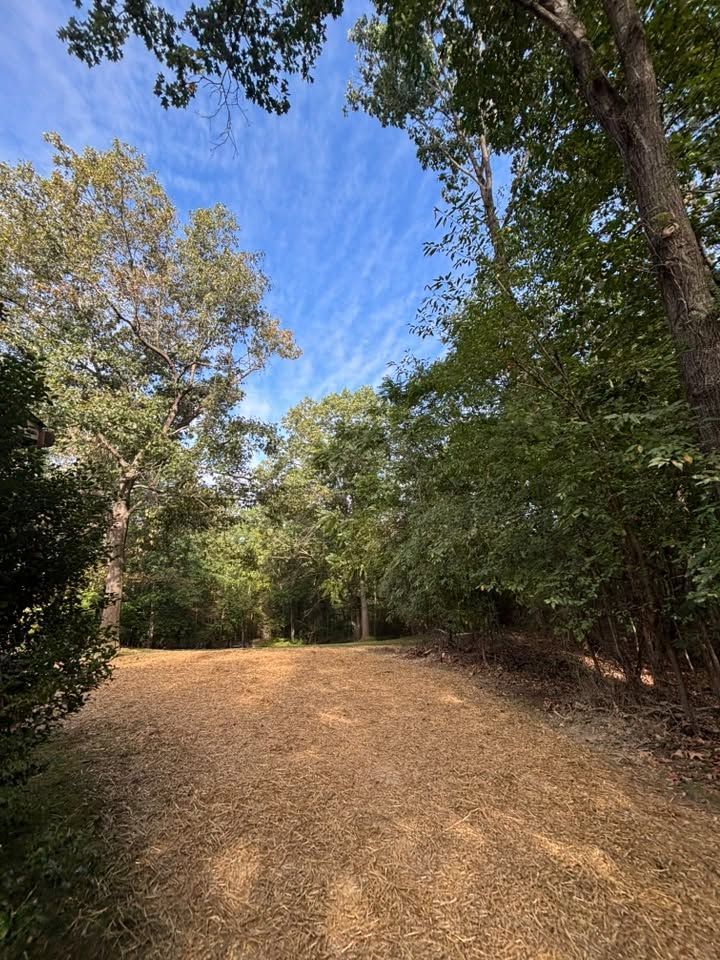
The forestry mulcher head processes trees, stumps, and heavy brush simultaneously as the tracked carrier moves through the site. The cutting drum reduces material to a fine mulch layer that stays in place on the ground rather than being piled, windrowed, or trucked. Because the mulch blanket covers the disturbed soil immediately after the machine passes, the ground surface retains structure and resists erosion during the period between clearing and whatever comes next—whether that is seeding for pasture, staging for construction, or simply opening the property for access and management.
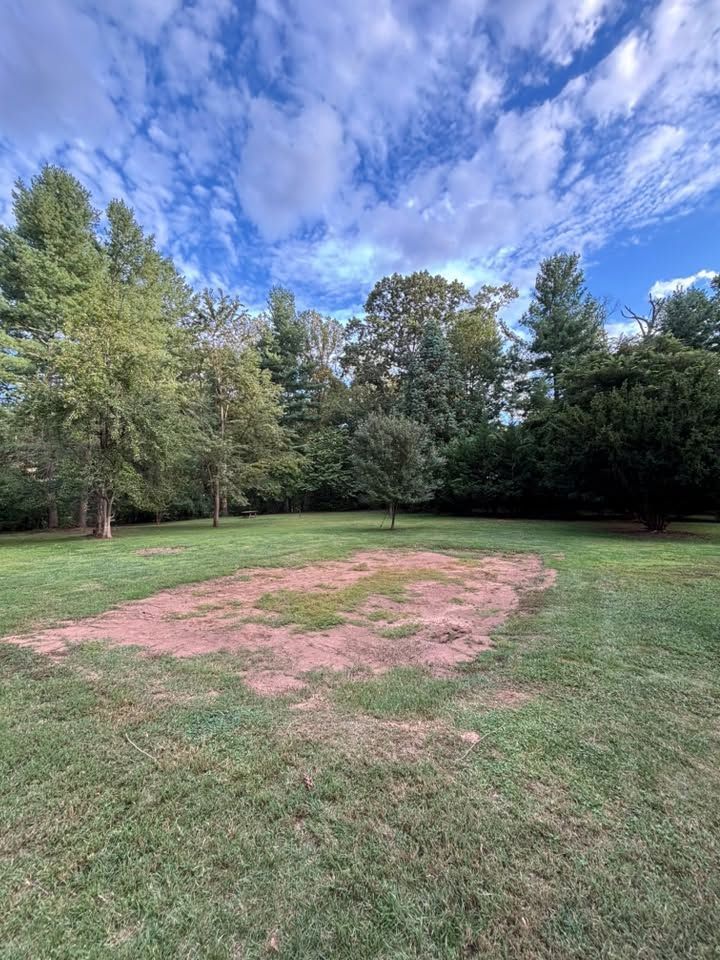
After a forestry mulching pass, the cleared area looks dramatically different from the day before: the standing vegetation is gone, stumps are ground to below or at grade, and the soil surface is covered by a consistent layer of shredded material. There are no slash piles to burn, no logs to haul, and no bare mineral soil exposed in the way a dozer clearing leaves it. For properties in the Front Royal and New Market area where brush and mixed timber have established on former pasture or along property boundaries, this outcome is visible immediately and requires no follow-up debris management.
Forestry mulching is most effective on trees up to a certain diameter—typically stems that the mulcher head can process in a single pass without requiring the machine to stop and reposition. Large-diameter trees or hardwood stumps with extensive root systems may require a different approach or a combination of methods. The site visit before scheduling allows GT Excavation to identify any areas where the vegetation mix requires a modified clearing sequence rather than a standard mulching pass.
Questions About How Forestry Mulching Works
Shenandoah Valley parcels cleared with forestry mulching vary in vegetation density, terrain, and intended end use, all of which affect how the work is sequenced and what the finished ground condition looks like. These questions address the process directly.
What types of vegetation does a forestry mulcher process in a single pass?
The mulcher head handles brush, saplings, small to medium-diameter trees, stumps, and woody debris simultaneously; material is fed through the rotating drum and discharged as fine chips without separating the cutting and grinding operations into two steps.
How does mulching affect the soil surface compared to dozer clearing?
Dozer clearing scrapes topsoil and organic material off the surface along with the vegetation, leaving exposed mineral soil; mulching leaves the topsoil layer intact beneath the mulch blanket, which preserves soil structure and supports faster vegetative recovery for pasture seeding or erosion control.
What size trees can a forestry mulcher handle without a separate felling operation?
Most forestry mulchers process stems up to approximately six to ten inches in diameter in a single pass; trees larger than that typically require felling first, and the mulcher follows to grind the remaining stump and brush—a combined approach that GT Excavation assesses during the site visit before scheduling.
How does slope and terrain on Shenandoah Valley parcels affect where the tracked carrier can operate?
Tracked carriers have a lower center of gravity than wheeled machines and can operate on moderate slopes common on hillside properties throughout the valley, but steep or wet ground requires terrain assessment before the equipment is scheduled to confirm safe operating conditions.
What is the ground condition immediately after mulching, and what can be done with it next?
The cleared area is covered with a mulch layer over intact topsoil, stumps are at or below grade, and the surface is accessible by foot and light equipment; it can be seeded for pasture, assessed for construction staging, or left as-is for land management and access without any additional debris removal.
GT Excavation also performs forestry mulching in Woodstock, Mount Jackson, Strasburg, New Market, and Middletown. To review your parcel's clearing requirements and schedule an assessment in Edinburg or the surrounding area, call GT Excavation at (540) 325-3806.