
Hazardous Trees Removed Without Damaging What Stays
Tree removal in Edinburg for dead, leaning, or structurally compromised trees near buildings, fences, and tight spaces
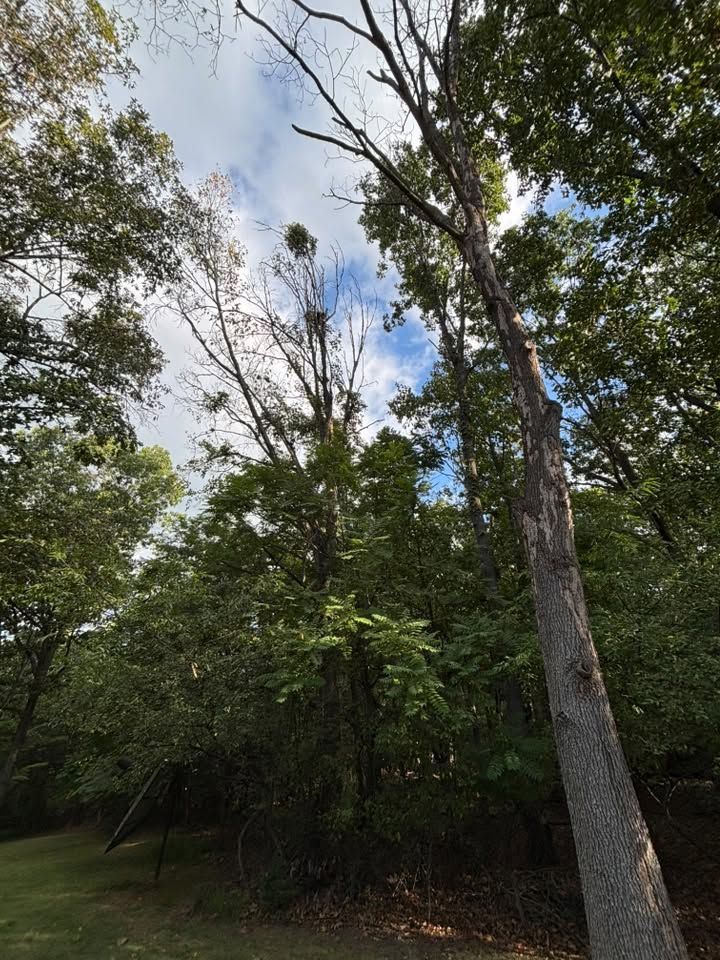
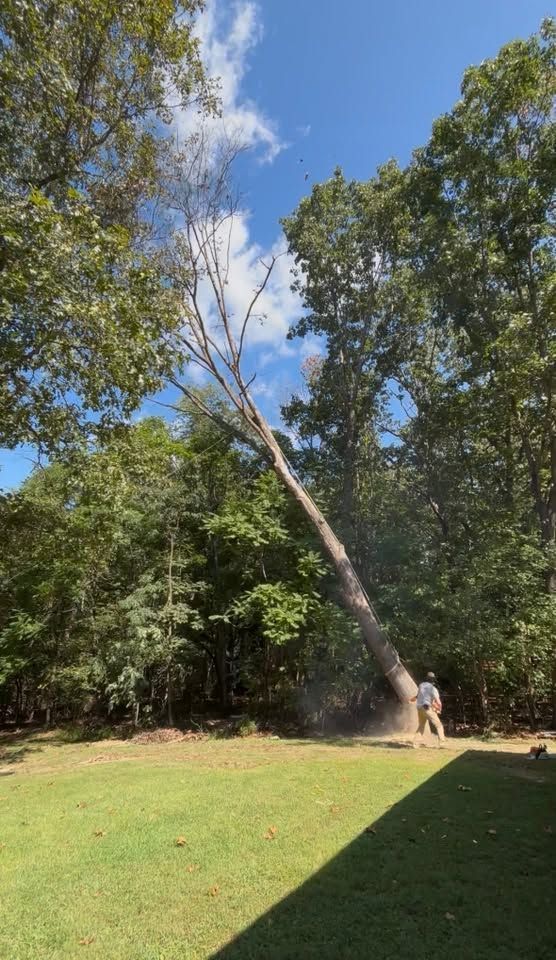
A tree leaning toward a roofline, a dead hardwood with bark sloughing off, or a large specimen growing against a fence line—each of those situations carries different risks and calls for a different removal strategy. Dropping a tree incorrectly near a structure doesn't just create property damage; it can leave a root system or stump in a location that complicates every landscaping or construction project that follows. GT Excavation removes dead, hazardous, and unwanted trees in Edinburg using in-house climbers and rope techniques to control where material lands, which makes it possible to work in spaces where simply felling a tree from the base isn't a safe option.
Every removal starts with an assessment of the tree's condition, size, and proximity to structures. A dead tree behaves differently than a live one under climbing load—wood integrity, branch attachment strength, and trunk stability all factor into how the work gets sequenced. GT Excavation's owner is actively building a full tree service team and works directly with insurance companies on removals involving trees that have already fallen on or are in contact with structures, which means the crew handles situations that other removal operations decline.
To discuss a specific tree's condition and what removal will involve, call GT Excavation at (540) 325-3806 to arrange an on-site assessment.
How Controlled Tree Removal Protects Surrounding Property
When a tree sits close to a building or fence, rope and climbing techniques allow the crew to remove it in sections rather than as a single fell—each piece is rigged and lowered in a controlled direction instead of being allowed to drop freely. That approach requires assessing the tree from above before any cutting begins: climbers identify which branches are load-bearing, where the trunk shows decay or structural weakness, and where anchor points are reliable. Skipping that assessment and cutting from the ground up is faster but shifts all the risk to whatever is standing within fall distance.
After removal, the area where the tree stood should show a low, clean stump cut and clear access to the ground—no large limbs left in adjacent trees, no debris caught in surrounding vegetation, and no damage to the structure, fence line, or plantings nearby. GT Excavation's use of in-house climbers rather than subcontracted crews means the same people who assessed the tree are the ones removing it, which keeps the plan consistent from evaluation through completion.
Root systems from large removed trees don't disappear immediately—depending on species and proximity to structures, they may need to be ground out or excavated if construction or landscaping is planned in that area. That determination is part of the initial assessment, so the scope of the project reflects what the site actually requires rather than treating stump and root work as a separate afterthought.
Common Questions About How Tree Removal Is Done
The questions below focus on the removal process, how decisions are made around structures, and what the finished site should look like once a tree is gone.
How do climbers assess a tree before removal begins?
The initial climb evaluates trunk integrity, branch attachment strength, and where the wood shows decay—those findings determine whether the tree can be sectioned from above or requires a different approach to avoid unexpected failure during the work.
What rope techniques are used to control where tree sections fall near structures?
Rigging lines are set from anchor points above the cut to redirect each section away from the structure as it's released—this keeps falling material on a planned path rather than allowing it to swing or drop freely toward the building.
When is piece-by-piece sectional removal necessary rather than a straight fell?
Any tree within fall distance of a structure, fence, utility line, or neighboring property typically requires sectional removal—the proximity leaves no safe drop zone for a full fell, and the control that rigging provides is the only way to complete the work without damage.
How does a dead tree change the approach to removal compared to a live one?
Dead wood loses the flexibility and predictability of live timber—branches can break under climber load without warning, and trunk sections may be brittle in ways that aren't visible from the ground, which requires additional rigging and more conservative cutting decisions.
What should the site look like after a tree removal is complete?
The stump should be cut low or ground flush depending on planned use, no large debris should remain on-site unless requested, and any adjacent plantings or structures that were protected during the work should show no damage from the removal.
GT Excavation also performs tree removal in Woodstock, Mount Jackson, Strasburg, New Market, and Middletown. For trees near structures, touching a building, or in tight locations where the removal approach matters most, speak directly with GT Excavation about what the work involves before scheduling begins.