
Clearing Land That Has Grown Beyond Control
Land clearing in Edinburg for overgrown brush, unwanted trees, and dense vegetation blocking construction or agricultural use
Dense brush lines, stands of volunteer trees, and years of accumulated growth can make a property unusable for building, farming, or even basic access. Rural and suburban properties throughout the Shenandoah Valley frequently carry this kind of vegetation—old hedgerows that expanded across field edges, tree lines that crept into cleared areas, and understory growth that thickened after land sat idle. GT Excavation clears that growth from properties in Edinburg, removing what doesn't belong while protecting the trees, structures, and boundary features that need to stay.
The work starts with a property assessment to identify what gets removed and what gets preserved. That distinction matters more than most property owners expect—a crew that clears indiscriminately can strip topsoil, damage root systems on trees you wanted to keep, or leave debris piles that create their own obstacles. Because the owner of GT Excavation runs an active farming operation alongside the excavation business, he understands how land needs to function after clearing, not just how it looks immediately after the equipment leaves.
Request an on-site assessment to identify what your property needs before any clearing equipment is scheduled.
What Proper Land Clearing Actually Requires
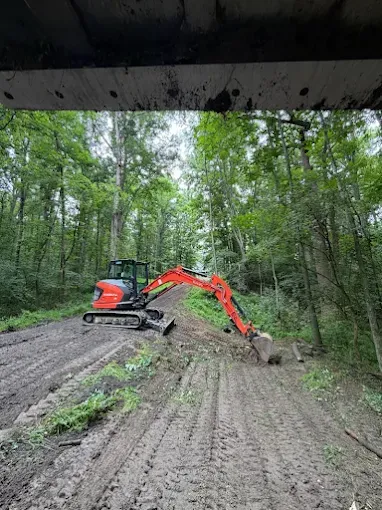
Effective land clearing involves more than felling trees and pushing brush into a pile. The sequence matters: larger trees are addressed first to control where they fall, then brush and understory growth is removed, then debris is hauled or processed, and the surface is graded so the land drains correctly and provides a stable base for whatever follows. On properties where the goal is agricultural use, that final grade affects how water moves across the field during heavy use—a surface left rough or rutted from equipment creates problems during planting and harvest that aren't immediately obvious at project completion.
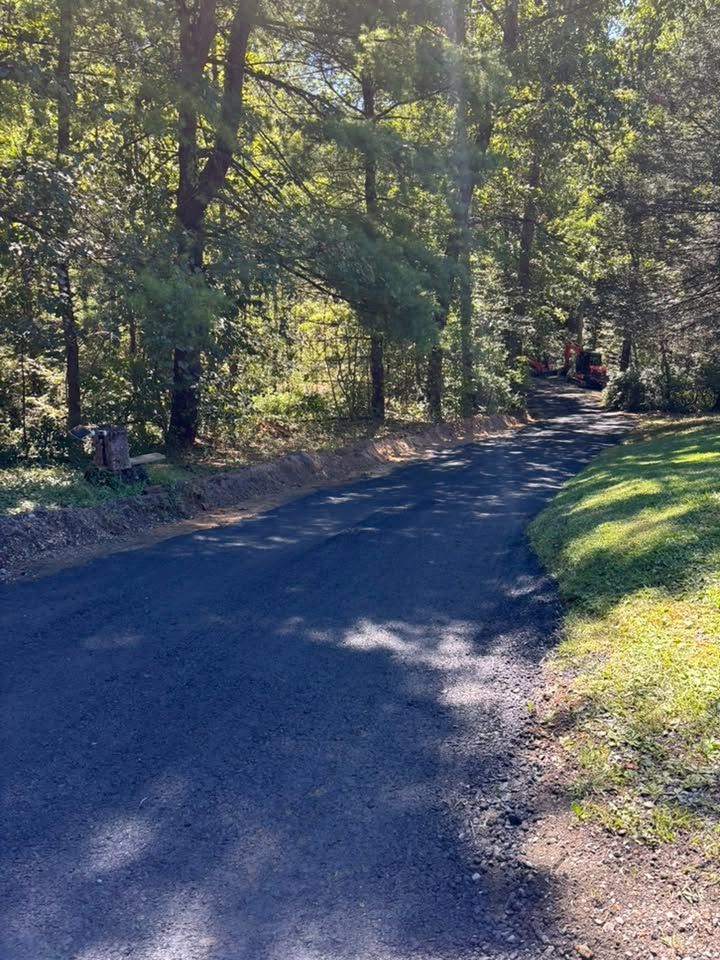
After GT Excavation finishes a clearing project, you'll find a surface where the designated area is open and workable—no root balls left to trip equipment, no debris lines blocking access, and no damage to the trees or structures that were marked to remain. The difference between a rushed clearing job and a planned one shows up months later, when the land actually performs the way you needed it to.
GT Excavation holds a Class A contractor's license and operates as a licensed and insured LLC. Projects vary in scale from small residential lots with overgrown corners to large rural parcels that need significant vegetation removed before construction or farming can begin—the assessment determines the right equipment and approach for each situation.
What Property Owners Ask About the Clearing Work
The questions below address how land clearing is performed, how decisions are made about what stays and what goes, and what the finished site should look like.
How do you decide which trees and vegetation to remove versus preserve?
The property assessment before clearing establishes clear boundaries—anything outside those boundaries stays, and the crew works from that map rather than making judgment calls on the fly.
What equipment is used for clearing dense brush and mature trees on Shenandoah Valley rural properties?
Depending on what's being cleared, the work may involve tracked equipment for soft-ground access, felling equipment for standing timber, and haul capacity for debris removal—selecting the wrong equipment for the terrain creates compaction and surface damage.
How is debris handled after trees and brush are cleared?
Removed material is either hauled from the site or processed on-site depending on volume and property access—leaving large debris piles creates obstacles for grading and construction that follow.
What should the cleared area look like when the work is finished?
Stumps should be cut low or ground, the surface should be free of root obstacles that interfere with equipment, and the grade should allow water to move off the cleared area rather than pool in low spots left by removed root systems.
Why does the sequence of clearing steps affect the final result?
Felling large trees before removing brush gives you control over where material falls—reversing that order buries the debris under the canopy and creates a tangle that's much harder to clear efficiently.
GT Excavation also performs land clearing in Woodstock, Mount Jackson, Strasburg, New Market, and Middletown. To talk through what your property requires and get an accurate picture of the scope involved, call GT Excavation at (540) 325-3806.