
Driveways Built for Long-Term Daily Use
Driveway installation in Edinburg for rural and residential properties needing stable, properly graded access
GT Excavation installs driveways across Edinburg and the surrounding Shenandoah Valley using gravel, stone, and engineered base materials suited to rural and residential properties in the area. Properties throughout this region—ranging from working farm parcels to single-family lots along county roads—often require driveways that can carry loaded trucks, trailers, and daily vehicle traffic without rutting or washout. A properly constructed driveway starts with the ground beneath it, not just the surface material placed on top.
GT Excavation uses laser leveling and grading equipment on every installation to establish the correct pitch for water to move off the driving surface and away from the base layer. That pitch calculation is not guesswork—it accounts for the slope of the lot, the direction of natural drainage, and the load the driveway will carry. The owner operates grading and excavation equipment on his own agricultural property, which means the decisions made during your installation reflect practical, daily-use experience rather than strictly residential assumptions.
Request a free on-site estimate to review your property's grade, drainage flow, and material options before work begins.
What Proper Driveway Construction Actually Requires
A driveway installation involves site clearing, subgrade preparation, base compaction, and surface material placement in a sequence that each step depends on the last. Skipping subgrade work or compaction to save time produces a surface that looks finished but begins shifting within a season or two of regular use. GT Excavation approaches each installation by grading the subbase first, addressing any soft or unstable areas before placing base aggregate, then grading the final surface layer to the engineered pitch.
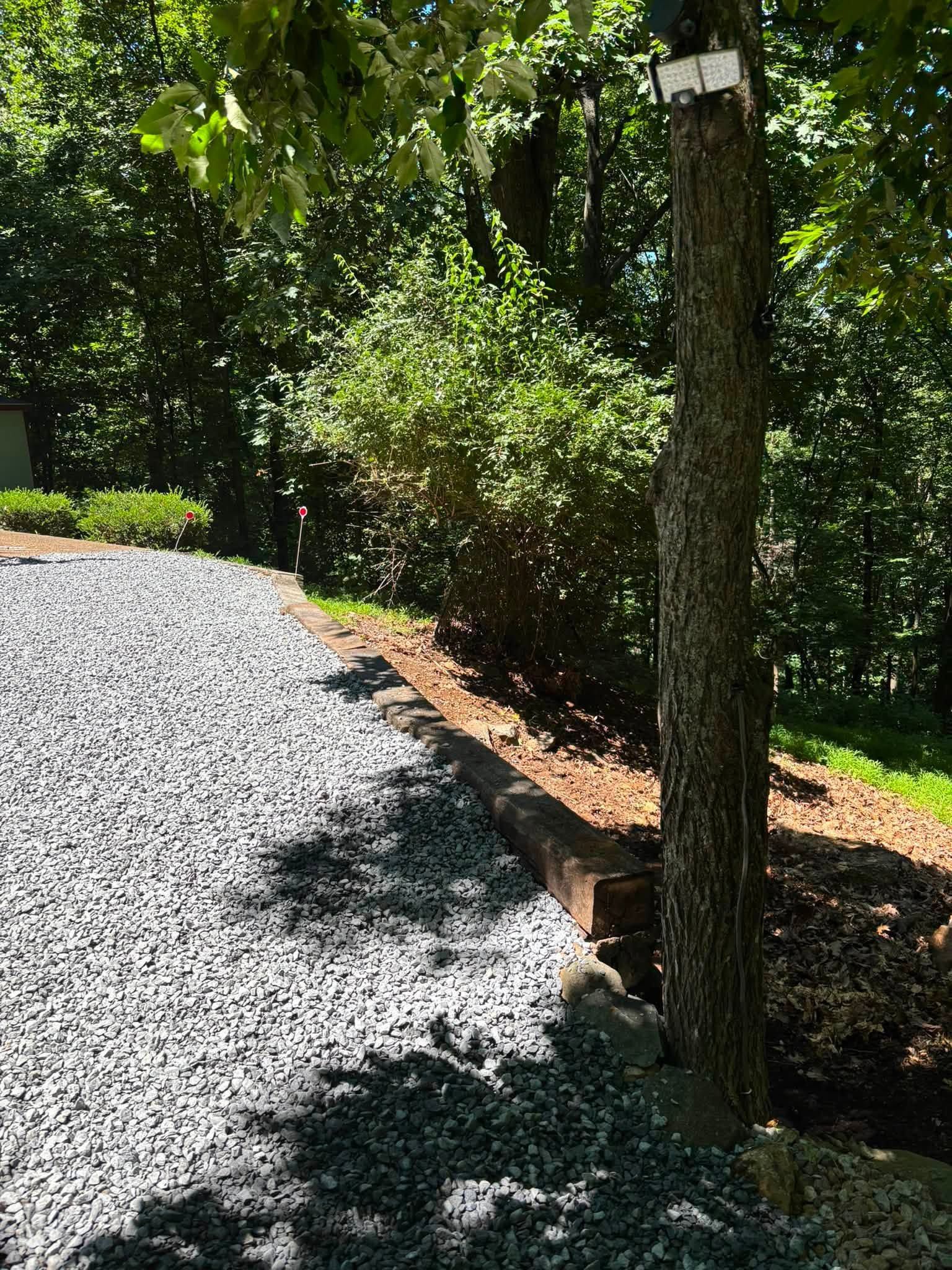
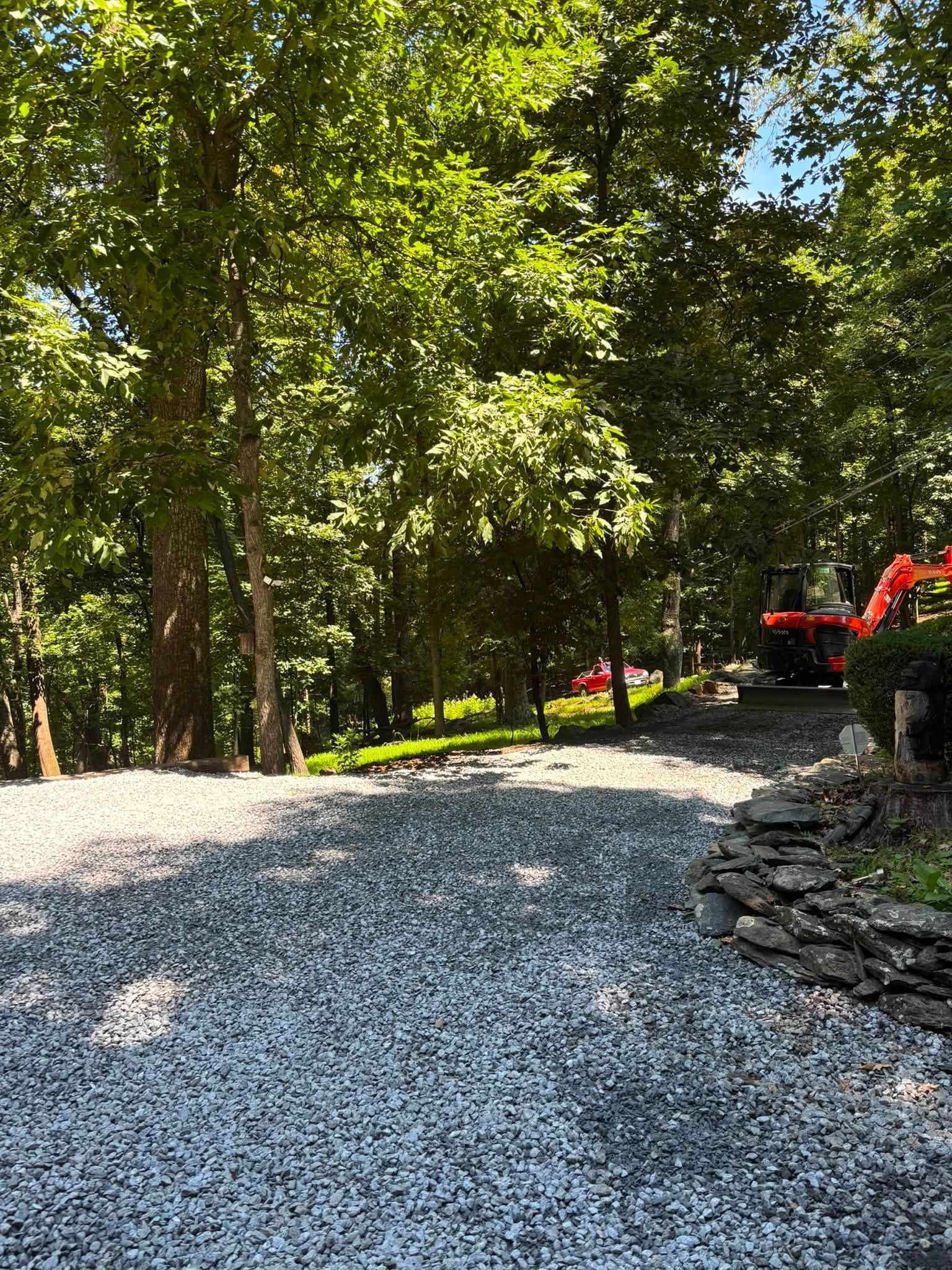
Once the installation is complete, you will notice that water no longer pools across the driving surface after rain—it moves toward the edges as designed. The crowned or pitched profile is visible across the width of the driveway, and the surface compacts firmly underfoot and under tire rather than shifting. These are the observable signs that the base and grade were done correctly, not just the material placed.
Material choice affects both initial cost and long-term maintenance frequency. Gravel driveways installed on a properly prepared base require periodic topdressing but remain stable for years under normal use. Crushed stone compacts more tightly than round gravel and tends to hold its shape better under turning traffic. GT Excavation is Class A licensed and insured, and the right material recommendation comes from evaluating the specific slope, traffic load, and lot conditions at your property—not a single standard answer.
Questions About How Driveway Installation Works
Rural and residential properties in the Shenandoah Valley vary considerably in slope, access width, and soil composition, which affects how each driveway installation is approached. The following questions address the work itself.
What does laser leveling actually do during a driveway installation?
Laser leveling establishes a precise reference grade across the entire project area so that the finished surface pitches consistently toward drainage rather than developing low spots where water collects and softens the base over time.
How does subgrade preparation affect the finished driveway surface?
If the native soil beneath the base layer is soft, compressible, or uneven, the aggregate placed on top will migrate into it under load, causing the surface to rut and sink; subgrade work removes or stabilizes those problem areas before any base material is placed.
What gravel or stone type is most appropriate for high-traffic rural driveways?
Crushed angular stone compacts more densely than washed round gravel because the irregular edges interlock under load, making it the standard choice for driveways that carry trucks, trailers, or frequent turning movements on Shenandoah Valley farm and rural residential properties.
When should a driveway be crowned versus pitched to one side?
Crowning—raising the centerline slightly above the edges—works well on flat or gently sloping lots, while single-direction pitch is used on sloped terrain where drainage naturally runs one way; the lot's existing grade determines which approach prevents edge erosion and base saturation.
How do you identify whether an existing base is adequate before adding a new surface layer?
Probing the surface under load, checking for flex or movement when driven over, and examining existing drainage channels reveals whether the base material has migrated, compacted unevenly, or been undercut by water—all conditions that require base work before any new material will perform correctly.
GT Excavation also installs driveways in Woodstock, Mount Jackson, Strasburg, New Market, and Middletown. To move forward with a project in Edinburg or the surrounding area, schedule a free on-site evaluation so the grade, drainage, and material requirements specific to your property can be assessed in person.